
Why Americans’ Energy Bills Keep Rising
Electricity prices have become one of the most talked-about issues in American politics. Heading into the 2026 midterms, voters across the political spectrum are saying the same thing: energy costs too much and somebody needs to fix it.
Voters Are Feeling the Pressure
Nationwide, electricity prices have risen almost 30% since 2020, with some states experiencing increases far above the national average.
Voter frustration is rising in tandem. A large majority of residents polled across Northeast states say their electricity bills are too high: 84% in Rhode Island, 82% in New York, 81% in Connecticut, and 80% in New Jersey.
There is no single explanation for rising electricity prices. Factors like weather events, regulations, and growing demand all play a role. Yet one issue appears repeatedly in the states with the highest costs: infrastructure hasn’t kept pace with demand.
The New England Case
The Northeast consistently ranks among the most expensive regions in the country for electricity. The six New England states and New York all rank among the top ten most expensive retail electricity markets in the country. In 2025, electricity bills in Maine, Massachusetts, and Rhode Island were more than 70% higher than the national average.
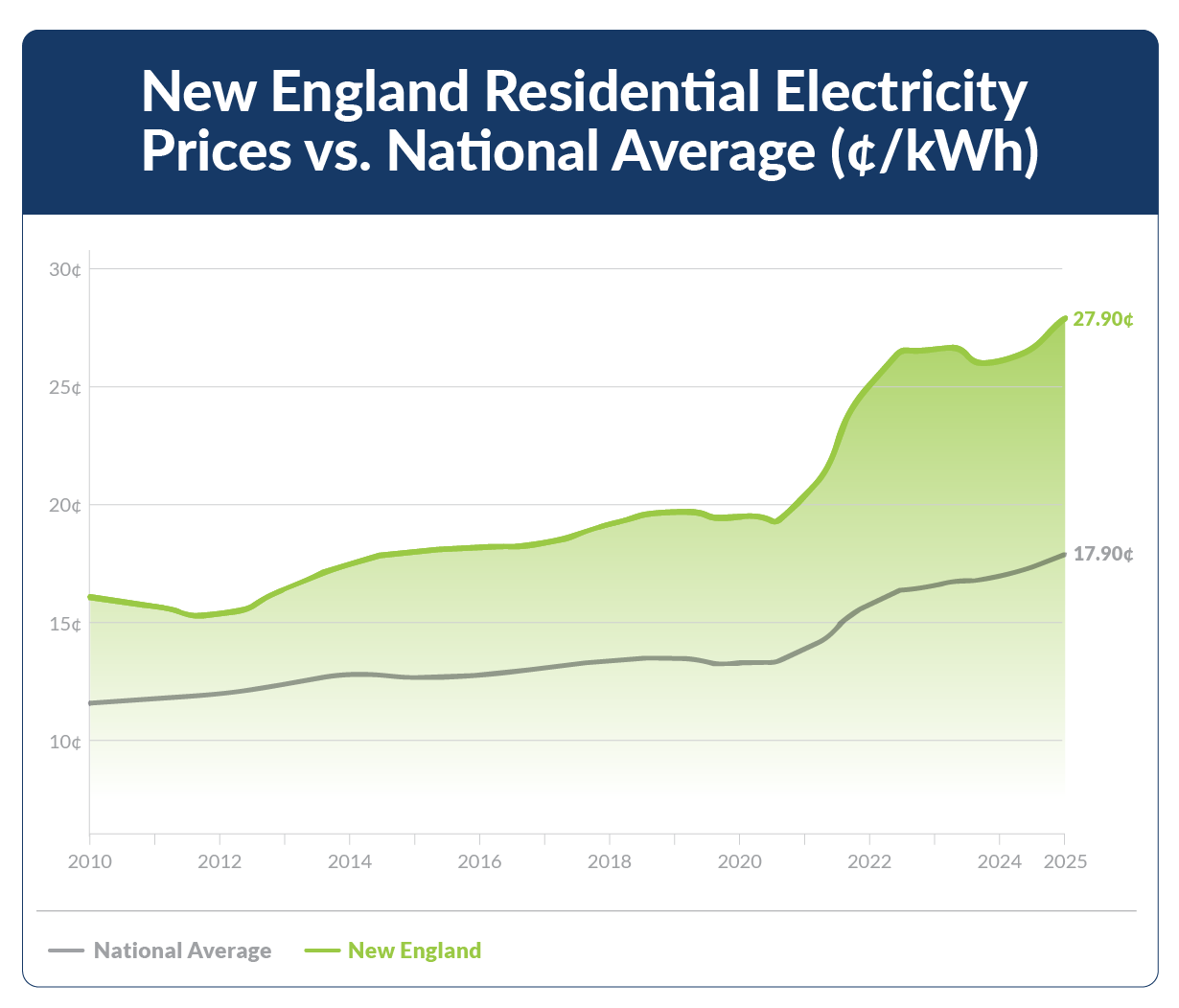
Source: EQT via EIA Electric Power Monthly, Table 5.6.A
These regional differences offer an opportunity to better understand why some Americans are paying significantly more than others. In New England, infrastructure constraints play a major role.
Over the past decade, major interstate pipeline projects have been delayed, canceled, or blocked, while transmission expansion has lagged behind growing electricity demand. Permitting timelines have stretched into years, making it increasingly difficult for new infrastructure to come online.
In other words, supply exists, but the infrastructure needed to transport that supply has not kept pace. Large quantities of natural gas produced in nearby states do not reach the Northeast as efficiently as demand requires. That limits the region’s ability to increase natural gas delivery to homes, businesses, manufacturers, and power generators when demand surges.
Why Infrastructure Impacts Electricity Prices
The effects of infrastructure constraints become most visible during periods of peak demand.
When winter temperatures drop, households and businesses use more energy to heat their buildings. Higher energy bills are expected when consumers use more electricity. But when fuel delivery systems are constrained, prices can rise even further as available supplies struggle to meet demand. Gas prices for the Algonquin Citygate pipeline (New England) spiked over 450% higher than the Dominion South pipeline (Appalachia) in January 2025 and 2026.
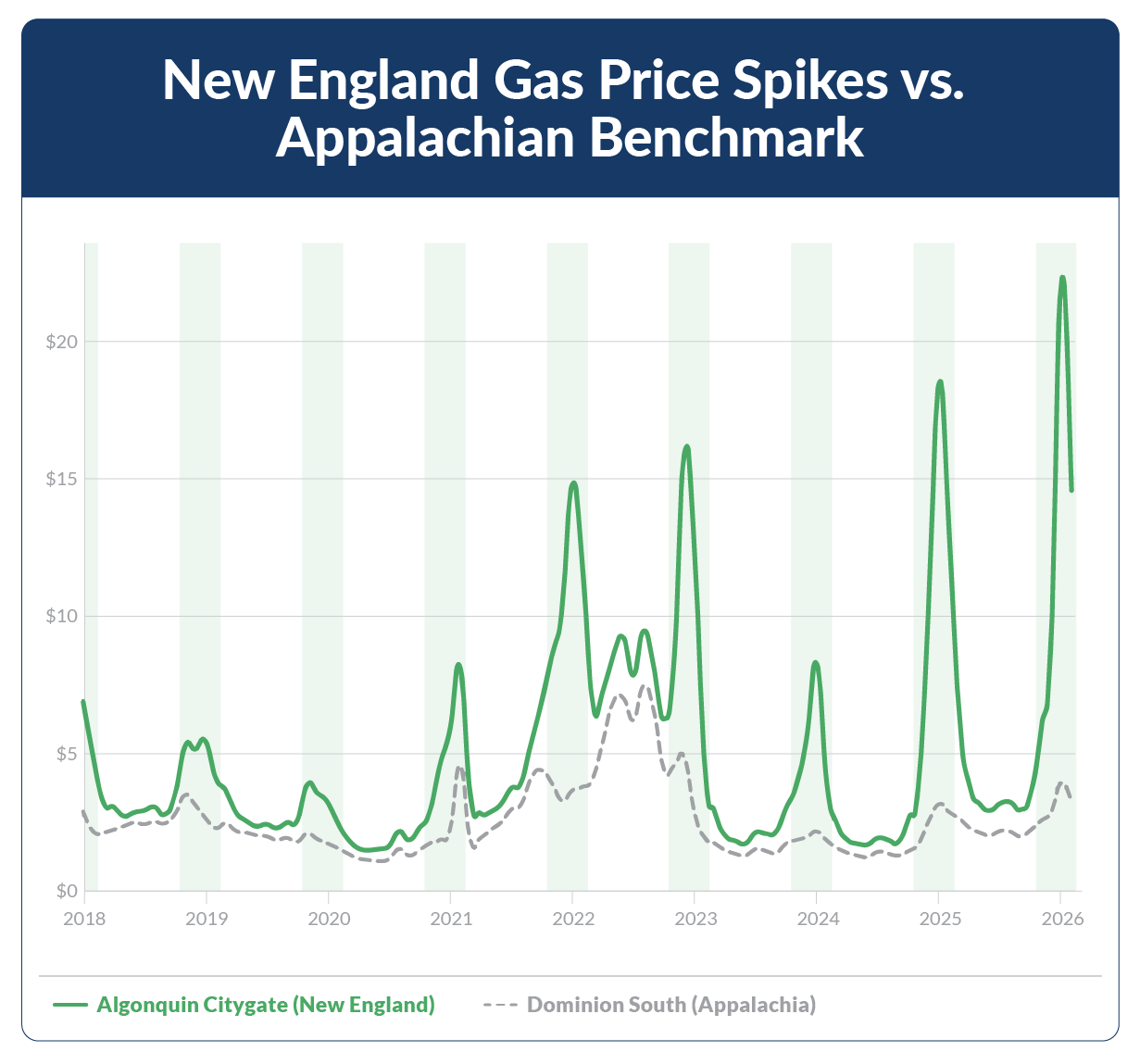
Source: EQT via EIA Natural Gas Monthly, NGI, FERC filings
When pipeline capacity is constrained, grid operators must rely on alternative generation sources to maintain reliability. In New England, this often means greater use of oil- and coal-fired generation during periods of peak demand.
During the week of Winter Storm Fern in January 2026, electricity generation from coal in the lower 48 states increased by 31% compared with the previous week, while oil temporarily became the primary source of power generation in New England. This shift increased costs for consumers and required them to rely on higher-emission fuel sources.
More pipeline capacity would help stabilize both costs and emissions by decreasing the volatility in what energy sources are being used to generate electricity.
ISO-New England’s Electricity Generation during Winter Storm Fern
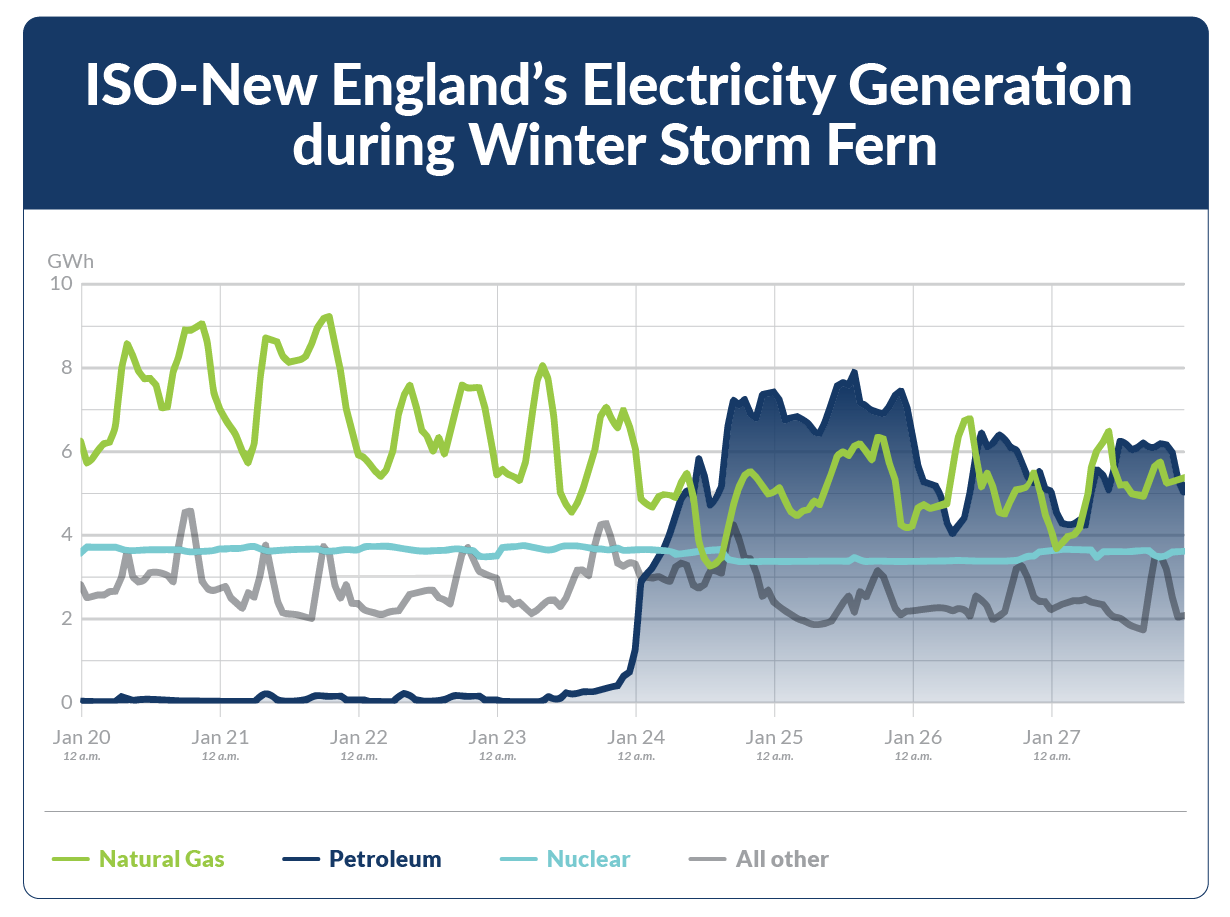
Source: U.S. Energy Information Administration, Hourly Electric Grid Monitor
How We Fix It
As energy demand continues to grow, maintaining affordability will require practical solutions that balance reliability, cost, and environmental objectives.
Modernizing and expanding energy infrastructure is an important part of that effort. Streamlined permitting, investment in pipeline and transmission capacity, and long-term planning can help reduce bottlenecks while improving system reliability.
Natural gas remains a critical part of the energy mix, particularly during periods of peak demand and extreme weather. Ensuring that energy can move efficiently from where it is produced to where it is needed helps support the affordable and reliable energy system that American families and businesses depend on every day.
As policymakers look for solutions to rising energy costs, the experience of New England offers an important reminder: infrastructure decisions have real consequences for affordability, reliability, and emissions.