Natural Gas Is Getting Cleaner, and Progress on Reducing Methane Emissions Shows How
Through industry collaboration, advanced methane detection, and shared best practices, Natural Allies for a Clean Energy Future members are helping drive cleaner, more reliable, and more affordable energy for America.
By: Mary Landrieu
Why Methane Reductions Matter
Natural gas plays a vital role in America’s energy future. It helps keep energy reliable and affordable, supports the growth of renewables, strengthens U.S. energy security, and provides a practical path to lowering emissions. But for natural gas to continue delivering these benefits, the industry must remain focused on reducing methane emissions across the supply chain.
That work is already well underway.
Methane is the primary component of natural gas. When captured and delivered to homes, businesses, power plants, and manufacturers, it is an important energy resource. But when methane escapes into the atmosphere, it becomes a powerful greenhouse gas. That is why reducing methane emissions is one of the clearest and most immediate ways to make natural gas even cleaner.
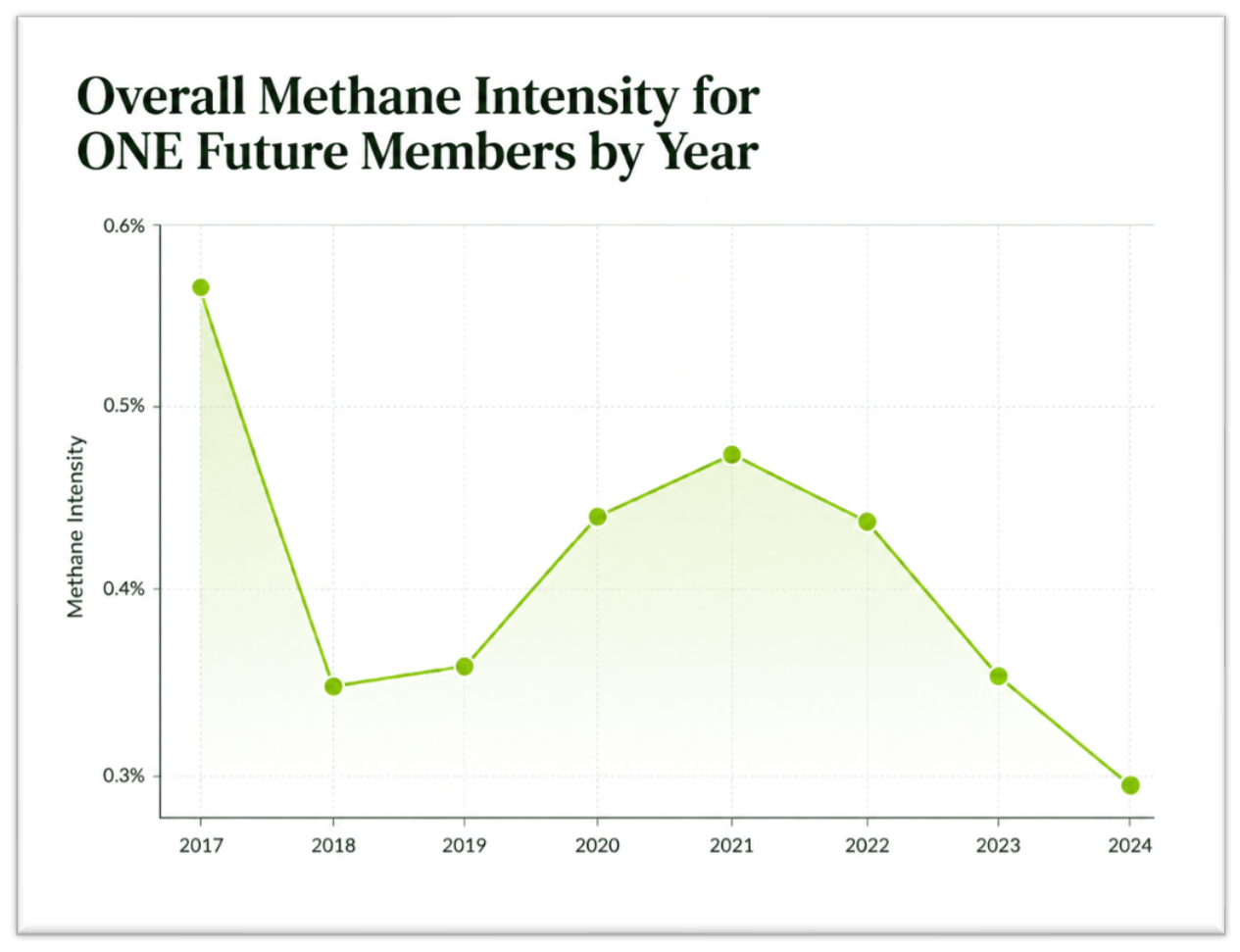
In its 2025 annual report, ONE Future, a coalition that includes many Natural Allies members, shows a collective methane intensity of just 0.28% from its members through 2024. (Source: ONE FUTURE 2025 ANNUAL REPORT ON CALENDAR YEAR 2024 METHANE INTENSITIES)
Industry Progress Is Already Underway
A new report prepared by ICF for ONE Future, an organization representing companies across the natural gas value chain, shows that the industry is making real progress and has a clear path to go further.
ONE Future members have been working voluntarily since 2014 to reduce methane emissions across production, gathering and boosting, processing, transmission and storage, and distribution.
Today, it’s members represent more than 40% of the U.S. natural gas value chain. Their progress is significant: in 2023, they reported an overall methane intensity of 0.331%, well below the coalition’s 2025 target of 1.0%.
The ICF report also found that ONE Future members are outperforming national averages across every major segment of the natural gas supply chain. For example, methane leakage rates for ONE Future members were lower than national averages in production, gathering and boosting, processing, transmission and storage, and distribution. Even when the analysis recalculated emissions using expected updates to EPA reporting rules, it’s members still performed better than national averages across all segments.
That matters because it shows two things at once: progress is real, and the industry is not standing still.
A Practical Roadmap for Further Reductions
The report looks closely at where additional methane reductions can come from and how much those reductions may cost. This type of analysis is known as a marginal abatement cost study. In plain terms, it asks: What technologies and practices can reduce methane emissions, how much methane can they reduce, and at what cost?
The answer is encouraging.
Across all operations, the report found that more than 75% methane abatement is achievable at a cost of $500 per thousand cubic feet of methane reduced. At a lower cost level of $100 per thousand cubic feet, the report found that by 2030, members could achieve 46% abatement under current reporting methods and 49% under revised EPA Subpart W reporting assumptions.
According to ONE Future’s Executive Director, Jim Kibler, “The [study] results demonstrate ONE Future members’ success in deploying cost-effective solutions to reduce emissions. … it builds on our progress to date and reflects our commitment to continuous improvement as we work to achieve meaningful methane reductions through innovative technologies.”
These findings are especially important because these members have already made major reductions. The report notes that the baseline used in this analysis already reflects years of voluntary action, meaning many of the easiest reductions have already been achieved. Even so, the analysis shows there are still meaningful opportunities to reduce methane further.
Technology Is Driving Results
So where will the next round of progress come from?
The report identifies several major areas of opportunity. One is leak detection and repair, often called LDAR. These programs use technologies such as handheld cameras, mobile surveys, aircraft, satellites, and continuous monitoring systems to find leaks faster so they can be repaired sooner.
Another major opportunity is reducing emissions from venting and combustion sources, including methane slip from engines and turbines, blowdowns from pipelines and compressors, pneumatic devices, vapor recovery systems, and compressor technologies.
The largest methane sources identified in the report include methane slip from combustion equipment, blowdowns, customer meters, pneumatic devices, reciprocating compressors, and compressor-related emissions. By focusing on these sources, companies can direct investments where they can have the greatest impact.
Cleaner Natural Gas Strengthens America’s Energy Future
This is what practical climate progress looks like: identifying the problem, measuring it more accurately, investing in better technology, and continuously improving performance.
Natural gas is already helping the United States reduce emissions while keeping energy dependable and affordable. Continued methane reductions make that value proposition even stronger. By reducing emissions across the supply chain, the natural gas industry can deliver the energy Americans need while shrinking its environmental footprint.
The path forward is clear. With better data, stronger monitoring, advanced technologies, and continued voluntary leadership, natural gas can continue becoming cleaner while remaining one of America’s most reliable and affordable energy resources.